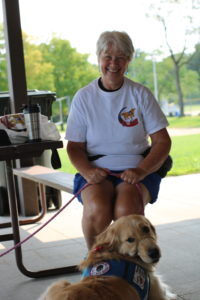
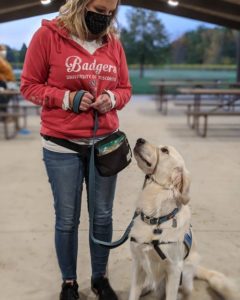
Have you ever considered becoming a volunteer trainer for WAGS? Now is the time! WAGS is currently accepting applications for volunteer trainers. No prior experience is necessary, only a love for dogs, a strong interest in learning, and a desire to make a difference.
WAGS Volunteer Trainers
Most volunteer trainers start as puppy raisers. WAGS dogs start their training at 7-8 weeks old, gradually learning basic obedience skills, beginning level service dog skills and appropriate behaviors, all while living and working with their volunteer puppy raiser.
Puppy raisers often take their pup-in-training to work, which is a great place for them to get socialization with a variety of people and get comfortable in busy environments. Trainers work one-on-one with the WAGS Program Director, and also attend group training classes. Pups stay with their puppy raiser for 10-14 months before moving on to another trainer for the second leg of their training. The commitment for becoming a WAGS trainer is 1-2 years.
WAGS volunteers learn in-depth training and problem solving skills, and continue to develop interpersonal skills like patience, empathy, teamwork and communication. WAGS trainers are part of a fun and supportive community working to benefit others.
WAGS covers all veterinary care and provides essential equipment such as crates, leashes, and gentle leaders. Food support is available through a volunteer stipend program. Volunteer trainers would be responsible for additional treats and toys.
Curriculum
WAGS dogs are raised and trained by volunteers under the direct supervision and guidance of the WAGS Program Director. WAGS utilizes positive, force-free training methods to teach and shape skills and behaviors. All training protocols are customized to optimize each dog’s strengths and temperament.
WAGS teaches an integrated curriculum of obedience, service and social support skills. WAGS dogs learn to complete practical tasks like retrieving dropped or out-of-reach items, tugging doors, and nosing buttons. They also learn advanced social skills for interacting with individuals and groups.
Why Employers Say Yes to WAGS
Learn how your workplace can support employees who volunteer as WAGS trainers while helping prepare future service and clinical therapy dogs.
To begin the process of becoming a volunteer trainer, fill out and submit the application on-line, or print and fill out the PDF and submit by mail. A WAGS staff person will reach out to you by phone. Further steps in the application process include an in-person interview, reference check and attending a class to meet current trainers and dogs.
Got Questions? We’ve Got Answers. Everything you need to know about becoming a WAGS Volunteer Trainer—from time commitment to training support and all the tail wags in between.
What is a WAGS Volunteer Trainer?
A WAGS Volunteer Trainer helps raise and train future service and clinical therapy dogs from puppyhood through early development. Most volunteers begin as puppy raisers, welcoming a pup at 7–8 weeks old and guiding them through foundational obedience, early service skills, and appropriate behaviors while the dog lives and works alongside them in everyday life.
Do I need prior dog training experience?
No prior experience is required. WAGS looks for individuals who have a genuine love for dogs, a strong interest in learning, and a desire to make a meaningful difference. Volunteers receive structured guidance and support throughout the training process.
What is the time commitment?
Becoming a WAGS trainer is typically a one- to two-year commitment. Puppies generally remain with their raiser for 10–14 months before transitioning to another trainer for the next phase of their development.
What kind of support and training will I receive?
Volunteer trainers work closely with the WAGS Program Director and attend group training classes. WAGS uses positive, force-free training methods and customizes training protocols to align with each dog’s strengths and temperament. Volunteers are supported every step of the way and are never expected to navigate challenges alone.
What skills do WAGS dogs learn?
WAGS dogs are trained using an integrated curriculum that includes obedience, service, and social support skills. They learn practical service tasks such as retrieving dropped or out-of-reach items, tugging doors open, and nosing buttons. In addition, they develop advanced social skills to confidently and appropriately interact with individuals and groups in a variety of environments.
Can I take the puppy to work?
Many puppy raisers are able to bring their pup-in-training to work, which provides valuable socialization opportunities and helps the dog become comfortable in busy settings. Workplace policies vary, so volunteers should confirm what is permitted within their organization.
What expenses am I responsible for?
WAGS covers all veterinary care and provides essential equipment such as crates, leashes, and gentle leaders. Volunteer trainers are responsible for the puppy’s food, treats, and toys during the training period. A food stipend is available upon request.
What are the benefits of becoming a volunteer trainer?
In addition to the fulfillment of helping prepare a service or clinical therapy dog for someone in need, volunteers gain in-depth training and problem-solving skills. Many also find they strengthen interpersonal skills such as patience, empathy, teamwork, and communication. Trainers become part of a supportive and mission-driven community working together to make a lasting impact.
How do I apply to be a WAGS volunteer trainer?
To begin the process, applicants should complete the online application or submit a printed PDF by mail. A WAGS staff member will follow up by phone. Additional steps include an in-person interview, a reference check, and attending a class to meet current trainers and dogs.